

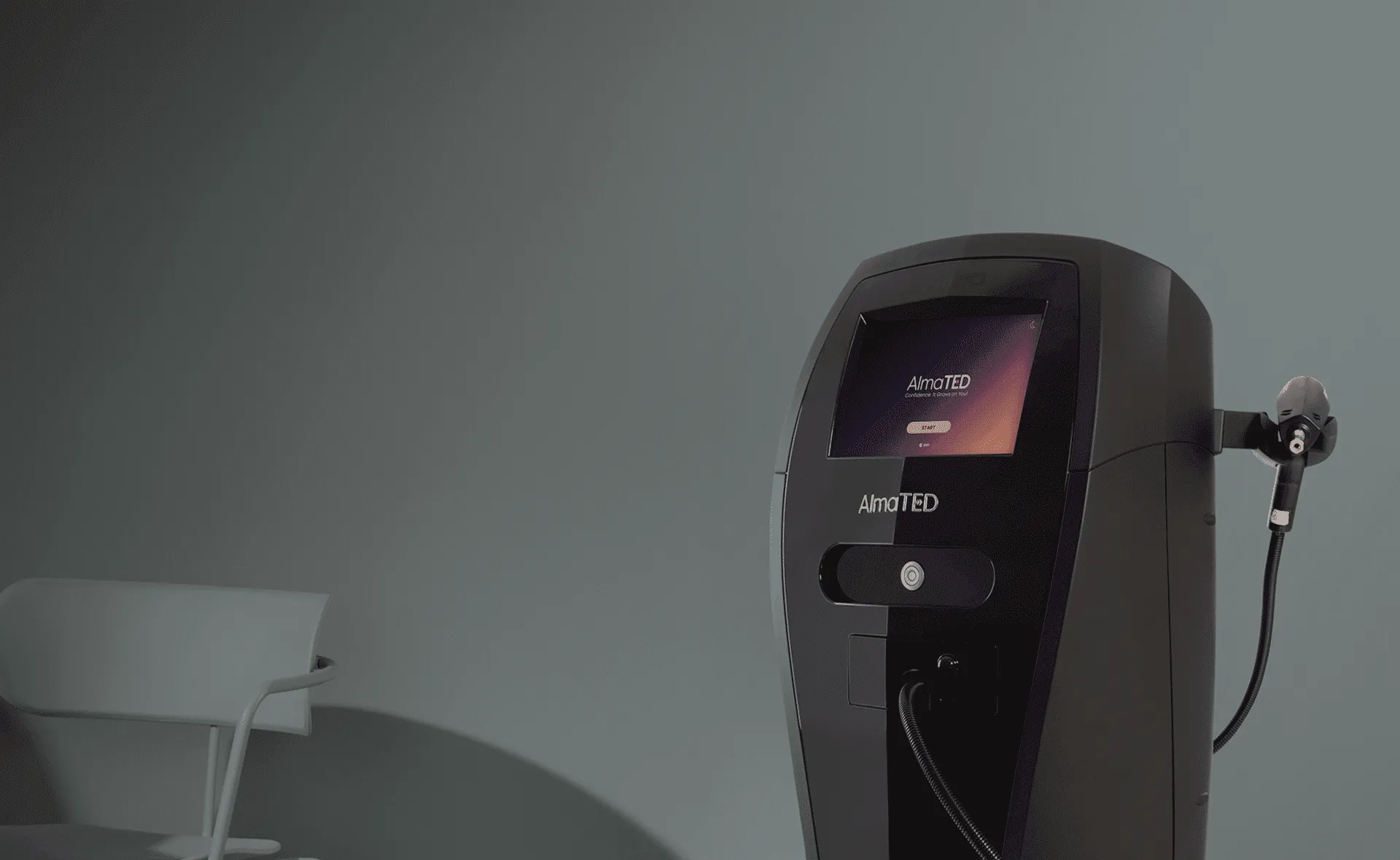
Alma TED may be a useful non-invasive option for appropriate adults concerned about shedding or reduced density. Its appeal is a short, needle-free visit and topical-delivery technology. The honest limitation: the numerical outcomes promoted for the original Alma TED come from manufacturer “data on file,” not an independent randomized trial.
The short version
A scalp treatment is not a diagnosis.
Pattern hair loss, temporary shedding, autoimmune hair loss, inflammatory or scarring disorders, medication effects, hormonal changes, and nutritional or medical conditions can look different—and require different care. Alma TED should be considered only after the pattern and history are reviewed.
Why the cause of hair loss matters
“Hair loss” describes a visible change, not one disease. Gradual patterned thinning can be consistent with androgenetic alopecia, while diffuse shedding may follow illness, major stress, childbirth, rapid weight change, nutritional deficiency, or medication changes. Round patches, broken hairs, scale, inflammation, tenderness, or shiny scar-like areas can point to other conditions.
The American Academy of Dermatology emphasizes that accurate diagnosis matters because no single treatment works for every form of hair loss—or even for every person with the same diagnosis. A medical history, scalp examination, and sometimes laboratory testing or biopsy may be appropriate. Sudden, patchy, painful, inflamed, rapidly progressive, or otherwise unexplained hair loss deserves medical evaluation rather than a cosmetic-treatment shortcut.
For androgenetic alopecia specifically, modern reviews support an individualized and often multifaceted plan. Established options can include topical or prescription medications, procedures, or hair restoration surgery, depending on diagnosis, sex, health history, pregnancy considerations, goals, and tolerance. Alma TED should be discussed in that wider context—not positioned as an automatic substitute for evidence-based medical therapy.
How does original Alma TED work?
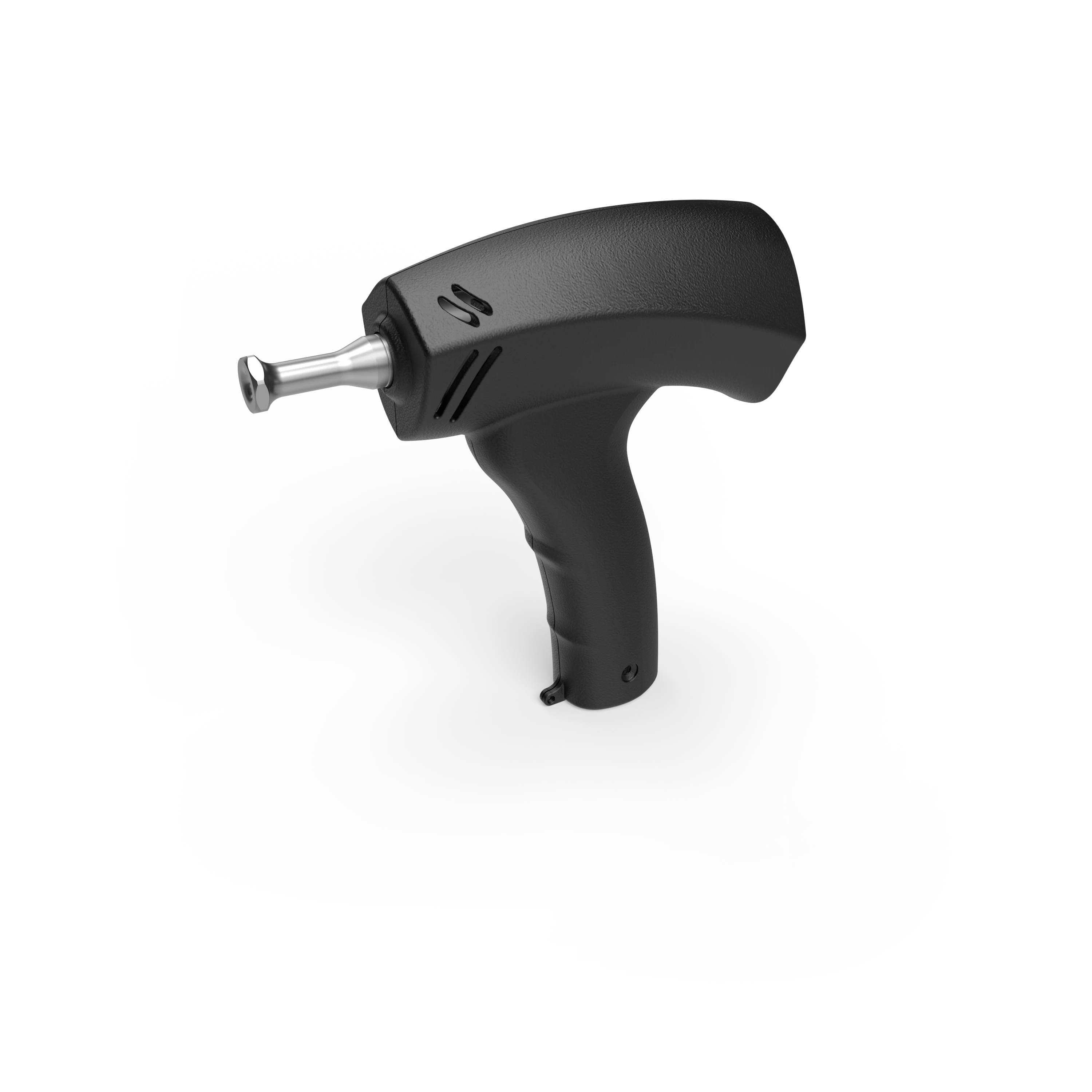
TED stands for TransEpidermal Delivery. According to Alma, the original platform combines ultrasound with its Impact Delivery system. Acoustic energy is used at the scalp while air pressure creates a pushback effect at the skin surface, supporting delivery of Alma's topical TED+ Hair Care Formula.
The manufacturer describes the formula as containing more than 30 ingredients, including peptides and nutrients, and positions it as support for the scalp environment and the appearance of stronger, thicker, fuller-looking hair. The treatment does not use needles and is not designed to create the controlled punctures associated with microneedling.
What do the Alma TED clinical summaries report?
Alma's official product page summarizes two company-held datasets. In a group of 31 participants—29 women and two men—Alma reports a 23% increase in hair density one month after three treatments and 31% at six months. The page also reports no pain or adverse events in that dataset.
In a separate group of 50 participants who received three treatments, Alma reports reduced shedding in 98%, increased growth in 96%, visible density improvement in 89%, and high satisfaction. Those figures are encouraging signals, but the official footnotes identify them as manufacturer “data on file.”
Evidence boundary
Promising numbers are not the same as independent proof.
The official summaries do not provide the full information needed to judge randomization, blinding, control groups, statistical methods, participant diagnoses, or independent replication. In the sources reviewed for this guide, we did not locate a peer-reviewed randomized controlled trial of the original Alma TED platform. The data also do not prove superiority to minoxidil, finasteride, PRP, microneedling, low-level light therapy, or another treatment.
A regulatory detail: original TED is not TED+
In June 2026, the FDA cleared the newer Alma TED+ System through the 510(k) pathway for specified androgenetic-alopecia and hair-growth indications in defined male and female patterns and Fitzpatrick skin types I–IV. The cleared TED+ configuration includes a red-light component and is described in the FDA summary as substantially equivalent to legally marketed devices for those indications.
Muse's current service page describes the original Alma TED platform. The TED+ clearance should not be used to imply that the original device has the same cleared indication, hardware, or evidence package. This distinction is easy to miss because the names are similar, so we are stating it directly.
What should a Bellevue Alma TED visit include?
Assessment before treatment
A thoughtful visit begins with the timing and pattern of hair change, scalp symptoms, family history, health conditions, medications and supplements, recent illness or stressors, pregnancy considerations, and previous hair treatments. When findings suggest a condition outside cosmetic care, referral or further medical evaluation may be the right next step.
A short, needle-free session
Alma describes treatment as approximately 20 to 30 minutes. The handpiece is moved across planned scalp areas while the topical formula is applied. The manufacturer recommends a starting series of at least three sessions about one month apart, though the appropriate schedule should be individualized.
Photography and realistic follow-up
Hair changes should be documented consistently—with similar lighting, part placement, angle, styling, and time interval. Hair cycles are slow, so a responsible plan evaluates shedding, density, tolerance, and photographs over months rather than promising an immediate transformation. Individual results vary, and some people may not respond.
Bellevue · Seattle Eastside
Start with the reason
for the change.
Muse MedSpa offers Alma TED consultations for adults concerned about shedding or reduced density. We will review your history, scalp, goals, the limits of the current evidence, and whether Alma TED—or a different next step—makes sense.
Common questions
What patients often ask
Does Alma TED regrow hair?
Alma TED is designed to support topical scalp delivery and the appearance of fuller, healthier-looking hair. Alma reports encouraging company-held clinical data, but results vary and the available manufacturer data do not establish that everyone will regrow hair.
Is Alma TED FDA cleared for hair growth?
It is important to distinguish the original Alma TED platform offered at Muse from the newer Alma TED+ System. In June 2026, FDA cleared TED+ for specified androgenetic-alopecia and hair-growth indications in defined populations. That clearance should not be treated as clearance of the original Alma TED device for the same indication.
How many Alma TED sessions are usually recommended?
Alma's patient information describes a starting series of at least three treatments approximately one month apart. Your actual plan and follow-up should be individualized after an evaluation.
Is Alma TED painful?
The treatment is needle-free, and Alma describes it as comfortable. Sensation varies by person; the appointment may include vibration, warmth, sound, or scalp pressure.
Can Alma TED replace minoxidil, finasteride, or medical treatment?
Not automatically. Hair thinning has many causes, and Alma TED should not replace diagnosis or medically indicated care. A qualified clinician can explain whether a topical, prescription, procedural, combined, or referral-based plan is appropriate.
When should hair loss be medically evaluated?
Seek a qualified medical evaluation for sudden, rapidly progressive, patchy, painful, inflamed, scar-like, or otherwise unexplained hair loss, or when shedding accompanies other symptoms. Even gradual thinning benefits from an accurate diagnosis before treatment.
Sources and further reading
- Alma: Alma TED official product information and manufacturer clinical summaries, accessed October 27, 2026.
- Alma for Patients: Alma TED treatment information, accessed October 27, 2026.
- U.S. FDA 510(k) database: Alma TED+ System, K251684.
- U.S. FDA 510(k) summary: Alma TED+ System.
- American Academy of Dermatology: Hair loss diagnosis and treatment.
- Management of androgenic alopecia: a systematic review of the literature, 2024.
- Updated review of treatment of androgenetic alopecia, 2024.
This article is general education, not medical advice, diagnosis, or a promise of hair growth. Individual results and treatment experiences vary. A qualified medical professional should evaluate the cause of hair loss, candidacy, risks, benefits, alternatives, and the appropriate treatment plan.