

“Body contouring,” “cellulite treatment,” and “skin tightening” are often grouped together, but they are not the same goal. A useful consultation starts by identifying which tissue feature is creating the concern—and whether an energy-based treatment is a reasonable match.
First, separate the three concerns
Localized adiposity
This means a discrete pocket of subcutaneous fat rather than generalized weight gain. Non-invasive contouring may be considered for selected areas, but it is not a weight-loss treatment and cannot substitute for nutrition, exercise, medical weight management, or surgery when those are more appropriate.
Cellulite
Cellulite is the dimpled or uneven surface most often seen on the thighs, buttocks, and hips. Reviews describe it as common, multifactorial, and incompletely understood. Fibrous septa, fat architecture, skin laxity, and volume distribution can all influence its appearance, which is why no single treatment is ideal for every pattern.
Skin firmness
Laxity can coexist with localized fat or cellulite, but it requires its own assessment. The amount of loose skin, tissue thickness, age-related change, prior procedures, and the degree of improvement someone expects all affect whether a non-surgical option makes sense.
A practical distinction
Contour is not the same as weight loss.
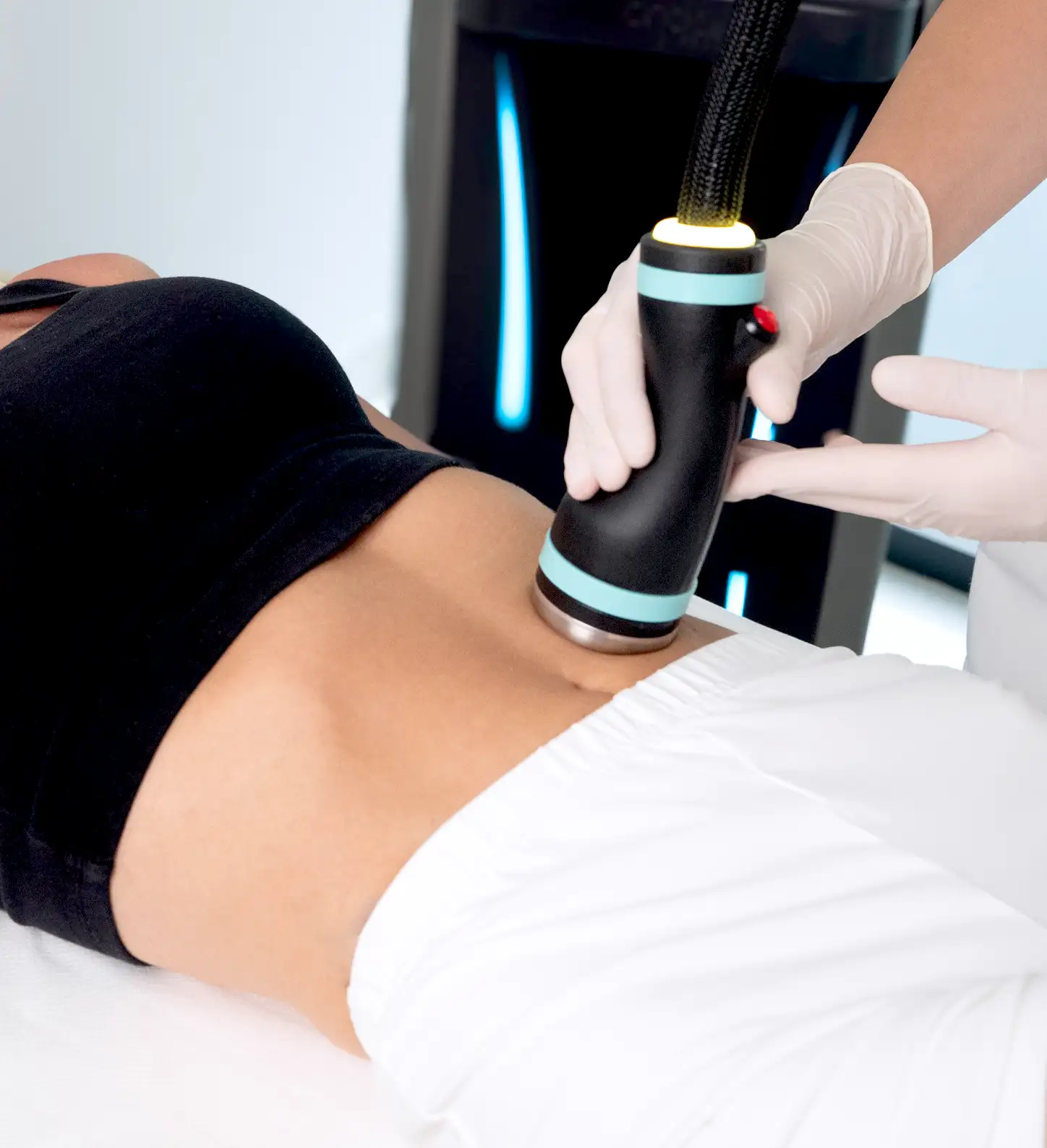
ONDA Pro is designed for selected aesthetic concerns in localized areas. It is not intended to treat obesity, create a surgical-level change, or guarantee a particular number of centimeters of reduction.
How does ONDA Pro use Coolwaves®?
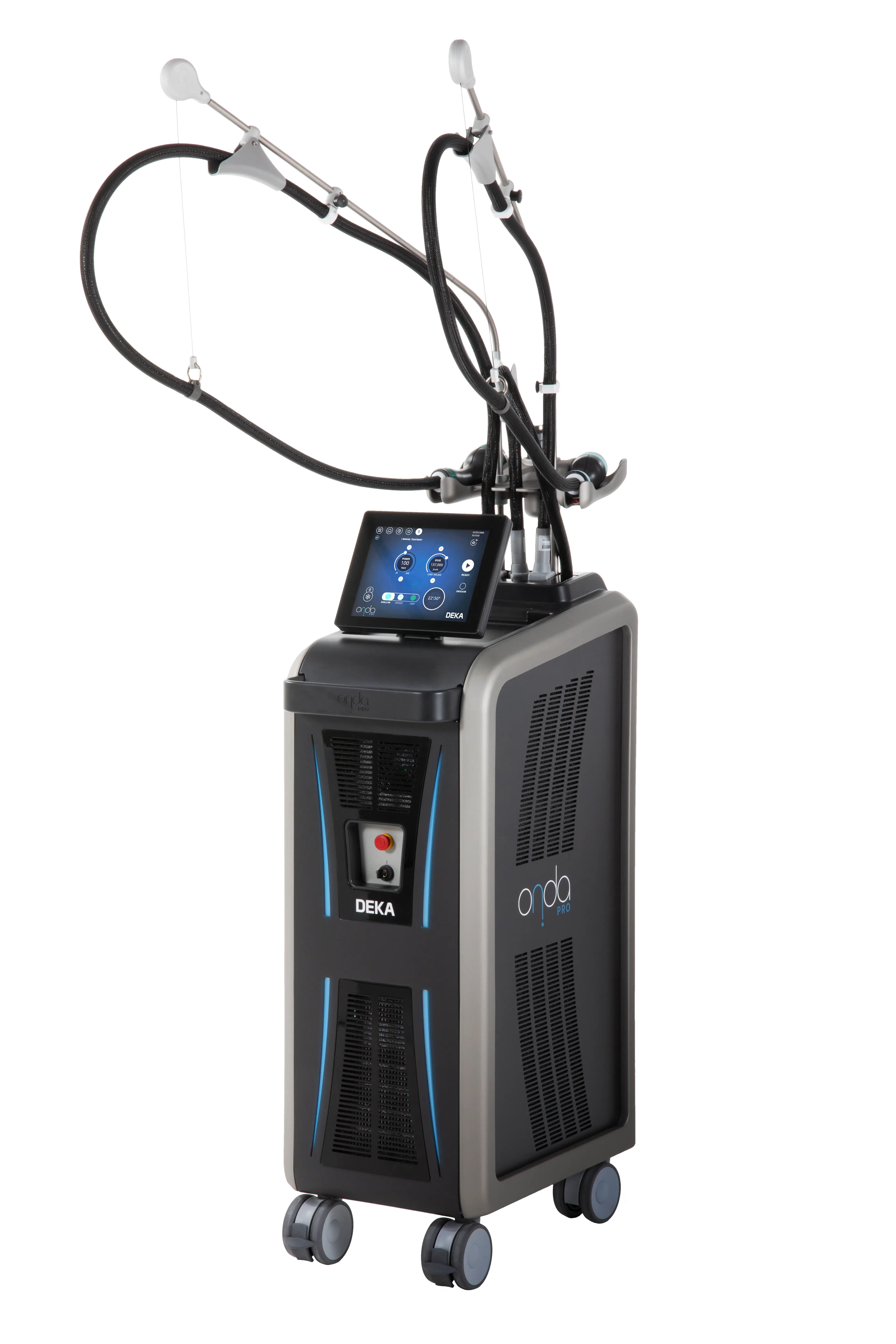
According to DEKA, ONDA Pro delivers microwave energy at 2.45 GHz. The platform uses Pocket, Shallow, and Deep handpieces intended for different treatment depths and priorities. The manufacturer describes Pocket for smaller lifting, firming, and submental applications; Shallow for cellulite, skin tightening, and localized adiposity; and Deep for localized adiposity in larger areas.
The handpieces combine energy delivery with contact cooling. In practice, the provider must select the treatment area, applicator, pattern, and settings according to anatomy and the configuration available in the U.S. DEKA notes that not every use, configuration, accessory, or brochure statement shown on its international website is available in the United States.
What do published studies report?
Cellulite: 26 women, four sessions
A 2022 prospective study followed 26 women with moderate or severe cellulite of the buttocks and posterior thighs. Participants received four microwave-treatment sessions. At three months after the final session, the authors reported improvement in two cellulite grading scales, participant satisfaction, and circumference measurements. No serious adverse events were reported.
The study is useful because it used recognized cellulite scales and a defined follow-up point. It was still small, included only women, and did not include a randomized untreated or sham-treatment group. Its photographs and measurements should not be interpreted as a prediction for an individual patient.
Abdominal contour: 19 adults, three sessions
A 2023 study included 19 healthy adults with visible abdominal fat. Participants received three sessions four weeks apart. The paper reported a mean abdominal-circumference reduction of 3.80 ± 1.21 cm at three months and no severe pain or noticeable discomfort during treatment.
That number needs context. The study excluded people with obesity, generalized fat distribution, or irreversible skin laxity; it had no control group; and 19 participants cannot establish what most patients should expect. Circumference is also influenced by measurement technique and factors beyond local fat thickness.
Submental area: early studies, different protocols
A 2022 study of 48 participants evaluated six submental treatments given two weeks apart and reported improvement in clinician- and patient-rated fat and laxity scales at 12 weeks. A later 2025 pilot report evaluated only 10 women who received two treatments 30 days apart. These studies suggest a possible role for microwave treatment beneath the chin, but they used different devices or handpieces, schedules, and outcome methods.
What the evidence does not establish
The available ONDA and microwave-treatment literature is mostly composed of small prospective studies, observational reports, pilot work, and expert recommendations. The studies vary in applicator, device generation, body area, session count, follow-up, and outcome measure. They do not provide a reliable universal treatment schedule or guarantee long-term persistence for every patient.
A 2024 international advisory-board review explicitly noted that long-term efficacy and safety evaluation was still missing and that future research could change its recommendations. In January 2026, a previously published one-year follow-up paper on microwave treatment for cellulite and localized adiposity was retracted. Muse does not use that retracted paper as evidence in this guide.
Independent, adequately powered randomized trials—with standardized photography, blinded assessment, diverse participants, clear adverse-event reporting, and longer follow-up—would make the evidence more dependable.
How Muse approaches ONDA Pro planning in Bellevue
1. Define the visible feature
We distinguish a localized fat pocket from cellulite depressions, diffuse skin laxity, muscle tone, and generalized weight change. More than one concern may be present, and a different treatment—or no treatment—may be more appropriate.
2. Examine the tissue and review health history
The consultation considers the location and thickness of tissue, skin quality, sensitivity, prior procedures, medications, medical history, implanted devices, and current goals. Treatment should not be selected from a photograph or marketing claim alone.
3. Discuss tradeoffs and realistic timing
Published protocols commonly use a series of sessions and assess change weeks or months later, but the appropriate plan varies. Comfort, temporary reactions, response, and the need for maintenance are individual. We discuss alternatives and the point at which a surgical or medical consultation may be more suitable.
Bellevue · Seattle Eastside
Start with the tissue,
not the trend.
Muse MedSpa offers individualized ONDA Pro consultations in Bellevue. We assess the area, clarify whether the primary concern is contour, cellulite, or laxity, and explain reasonable options without promising a standardized result.
Common questions
What patients often ask
Is ONDA Pro a weight-loss treatment?
No. It is discussed for selected localized contour, cellulite, or firmness concerns. It does not treat obesity or replace sustainable weight-management care.
How many ONDA Pro sessions will I need?
There is no universal schedule. Published studies have used different applicators and anywhere from two to six sessions depending on the area and protocol. Your plan should be based on examination, the available U.S. configuration, response, and goals.
Does ONDA Pro treat cellulite or fat?
Potentially either, depending on the applicator and treatment plan. Cellulite, localized adiposity, and laxity are different concerns and may require different strategies. A consultation is needed to determine which feature is most relevant.
Is there downtime?
Published studies generally describe non-invasive treatment and favorable tolerability, but temporary redness, warmth, tenderness, swelling, or other reactions can occur. Individual recovery varies, and risks should be reviewed before treatment.
When should I judge the result?
Studies commonly reassess outcomes several weeks to three months after a treatment series. Changes should not be judged from immediate post-treatment appearance alone, and the timing and magnitude of response vary.
Sources and further reading
- DEKA: ONDA Pro official product information, accessed October 19, 2026. DEKA notes that some configurations, accessories, and intended uses may not be available in the U.S.
- Hoffmann K, et al. Microwave-Energy-Based Device for the Treatment of Cellulite and Localized Adiposity, Bioengineering, 2024.
- Bennardo L, et al. Microwave Therapy for Cellulite: An Effective Non-Invasive Treatment, Journal of Clinical Medicine, 2022.
- Bonan P, et al. Results on Reduction of Subcutaneous Adipose Tissue Using a Novel Body Contouring System Based on Microwave Technology, Die Dermatologie, 2023.
- Salsi B, Fusco I. Non-invasive System Delivering Microwave Energy for Unwanted Fat Reduction and Submental Skin Tightening, Journal of Cosmetic Dermatology, 2022.
- Zappia E, et al. An Innovative Microwave Technology for the Treatment of Submental Skin Laxity, Lasers in Medical Science, 2025.
- Gabriel A, et al. Cellulite: Current Understanding and Treatment, Aesthetic Surgery Journal Open Forum, 2023.
- Retraction notice: Use of a Microwave Device for the Treatment of Cellulite and Localized Fat Adiposity, 2026. The retracted article was excluded from this review.
This article is for general education and is not medical advice, diagnosis, or a promise of outcome. Individual results and treatment experiences vary. A consultation with a qualified medical professional is required to assess risks, benefits, alternatives, and candidacy.