

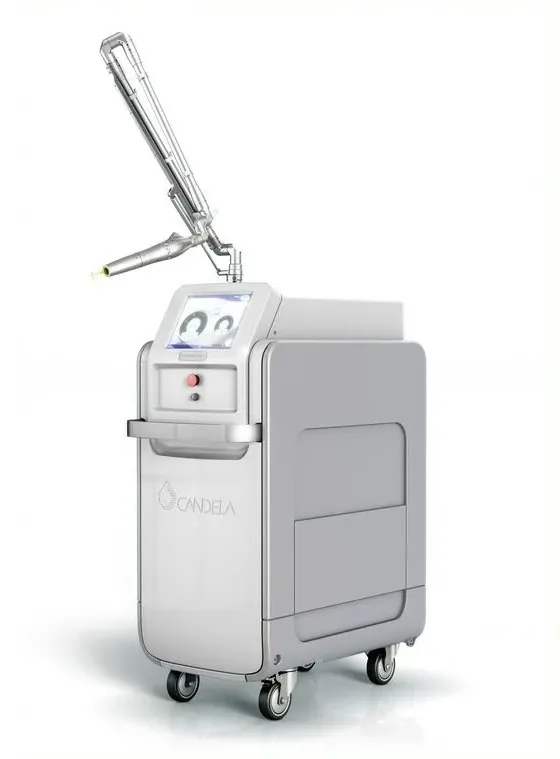
PicoWay is an FDA-cleared picosecond laser platform with full-beam and fractional applicators for selected tattoos, benign pigmented lesions, wrinkles, and acne scars. Its short pulses create a strong photoacoustic effect—mechanical disruption with less reliance on heat than older nanosecond systems. That versatility is useful, but it does not make every brown mark a laser target.
The short version
“Pigmentation” is a category, not a diagnosis.
Before treatment, a provider should consider what the pigment is, how deep it sits, whether it is stable or recurrent, the patient’s skin type and tanning history, and whether the lesion needs medical evaluation rather than cosmetic laser treatment.
How PicoWay works
Picosecond means a pulse measured in trillionths of a second. PicoWay delivers high peak power in these ultra-short pulses. For tattoo ink and benign pigmentation, the target absorbs energy and undergoes a photoacoustic disruption into smaller fragments that the body gradually clears.
For acne scars and wrinkles, PicoWay Resolve uses a fractional micro-beam approach. Candela describes the formation of microscopic laser-induced optical breakdown zones below the surface, intended to initiate a remodeling response while leaving much of the epidermis intact. This is a different goal and delivery pattern from treating a discrete brown spot or tattoo.
The platform offers several wavelengths because color and depth affect energy absorption. The FDA-cleared use and appropriate skin types vary by wavelength and applicator, so “PicoWay treatment” is not one universal protocol.
Four pigment concerns, four different conversations
Benign sun spots and lentigines
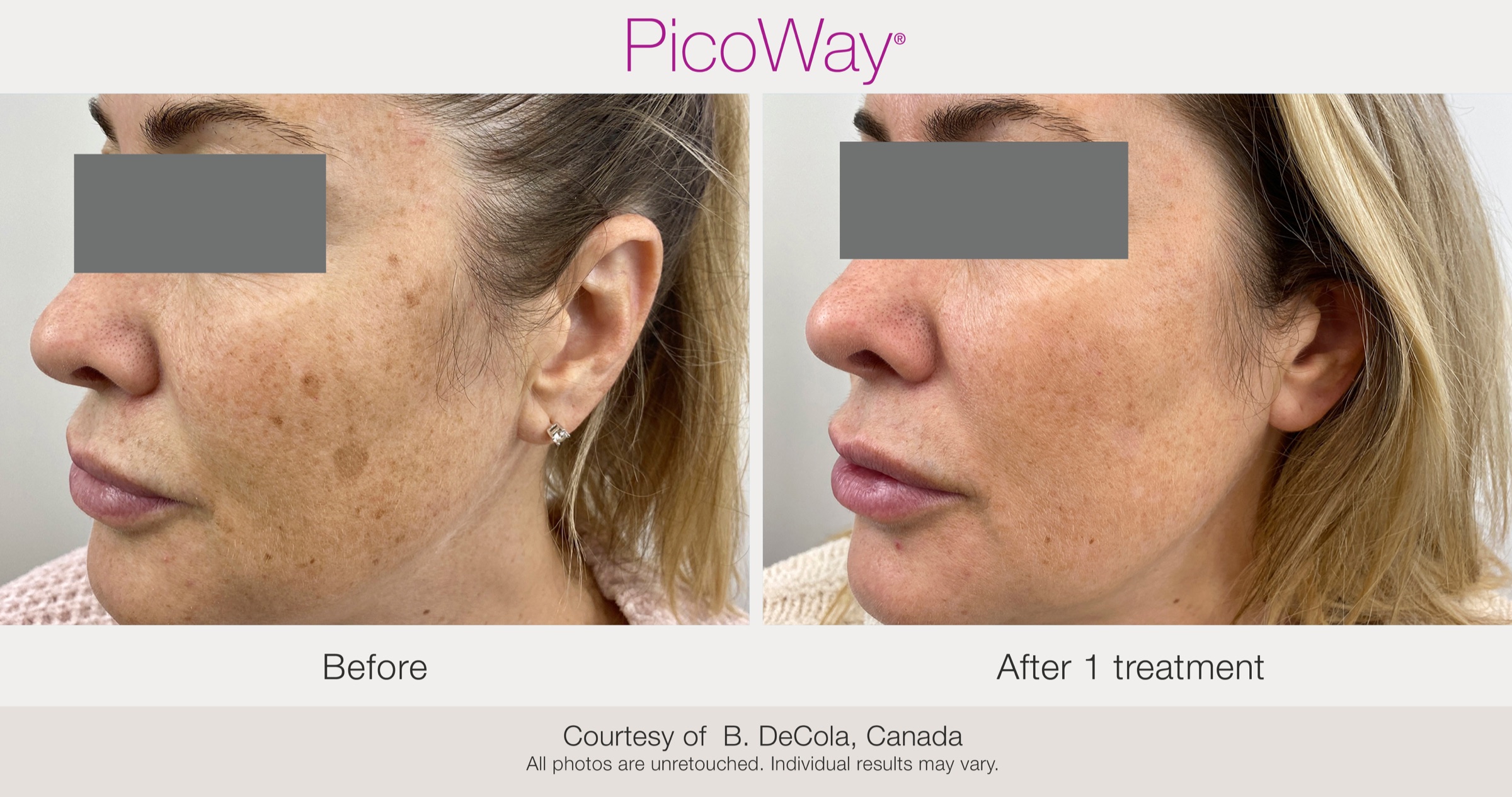
Discrete, stable benign pigmented lesions can be good laser targets after appropriate evaluation. The selected wavelength should correspond to the pigment and skin type. Treated pigment may temporarily darken or crust before it lightens. New sun exposure can create new lesions, so daily photoprotection remains part of the result.
Post-inflammatory hyperpigmentation
Marks left after acne, irritation, or injury are influenced by ongoing inflammation and pigment response. Laser is not automatically the first or safest step—especially if acne or irritation is still active. Barrier care, sun protection, topical therapy, and time may be important parts of the plan.
Tattoo ink
Tattoo removal uses full-beam wavelengths chosen for ink color. Professional density, layered ink, location, scarring, and prior treatments all influence clearance. Multiple sessions are typical, and complete removal cannot be guaranteed.
Melasma
Melasma is a chronic pigment disorder influenced by light, heat, hormones, genetics, and inflammation. It commonly recurs. A plan may include strict broad-spectrum sun protection, visible-light protection, topical therapy, trigger management, and carefully selected procedures. Treating it like an isolated sun spot can lead to disappointment or worsening.
Where is the evidence strongest?
A 2020 systematic review evaluated 77 unique studies across dermatologic uses. It found the strongest evidence for tattoo treatment, with additional evidence of varying levels for benign pigmented lesions, rejuvenation, melasma, and scar revision. The authors still called for continued development of the evidence.
The FDA database lists multiple PicoWay 510(k) clearances, including the PicoWay Laser System under K220853. Clearance establishes substantial equivalence for specified indications and configurations; it is not a promise that every patient will achieve a particular level of clearance.
Manufacturer materials describe a broad range of adjustable wavelengths, beam-delivery patterns, spot sizes, and energy settings. That flexibility is clinically valuable because treatment can be tailored—but it also means outcomes and risks depend heavily on diagnosis, protocol, and operator judgment.
Melasma evidence boundary
Clearance is not the same as a cure.
A 2023 meta-analysis reported that picosecond lasers reduced melasma severity overall, but the studies were heterogeneous and results differed by wavelength. A newer 2026 meta-analysis of five randomized trials found 755-nm picosecond alexandrite treatment inferior to triple-combination cream for MASI reduction, with more post-inflammatory hyperpigmentation; certainty was low because trials were small and varied. These studies do not evaluate every PicoWay configuration, but they reinforce the need for conservative selection and realistic expectations.
What thoughtful treatment planning looks like
1. Identify the concern before selecting the laser
History, examination, skin type, lesion pattern, recent tanning, medications, previous pigment reactions, and current skincare all matter. Changing, asymmetric, bleeding, symptomatic, or diagnostically uncertain lesions should be medically evaluated rather than cosmetically treated.
2. Match the wavelength and delivery pattern
A provider may choose full-beam treatment for a discrete lesion or tattoo and a fractional Resolve approach for acne scars or wrinkles. The target, depth, color, and skin type guide the choice—not a preset menu alone.
3. Plan recovery and pigment prevention
Aftercare can include gentle cleansing, barrier support, avoiding picking or friction, and rigorous sun protection. The exact instructions depend on the indication. Patients prone to post-inflammatory hyperpigmentation may need a more conservative plan, test spot, pretreatment, or a different modality.
4. Reassess before repeating
Response should be documented with consistent photographs and enough time between sessions to evaluate healing. More treatment is not automatically better; the plan should change if pigment worsens, recovery is prolonged, or the diagnosis is uncertain.
Bellevue · Seattle Eastside
Start with what the
pigment actually is.
Muse MedSpa offers PicoWay consultations for selected pigmentation, acne-scar, rejuvenation, and tattoo concerns. We will review your skin history, goals, risk factors, and recovery preferences before recommending a treatment plan.
Common questions
What patients often ask
Is PicoWay the same treatment for every brown spot?
No. Freckles, lentigines, post-inflammatory pigmentation, melasma, and other pigmented lesions can look similar but behave differently. A qualified provider should identify the likely type, assess skin tone and recent sun exposure, and determine whether laser treatment is appropriate before selecting a wavelength or setting.
Is PicoWay FDA cleared?
The PicoWay Laser System has multiple FDA-cleared indications and 510(k) clearances. The exact cleared use depends on the handpiece, wavelength, skin type, and concern. FDA clearance does not mean every pigment concern—or every person—is an appropriate candidate.
Can PicoWay treat melasma?
PicoWay includes configurations cleared for melasma, but melasma is chronic, complex, and prone to recurrence. Current reviews find mixed results across picosecond wavelengths and protocols, and some studies report post-inflammatory hyperpigmentation. Laser should be considered within a broader pigment-management and sun-protection plan, not presented as a guaranteed cure.
How much downtime should I expect?
Recovery varies with the indication, wavelength, spot size, energy, and treatment area. Redness, swelling, darkening or crusting of pigment, tenderness, or pinpoint effects can occur. Tattoo removal and fractional rejuvenation may have different recovery profiles. Your provider should give condition-specific aftercare.
How many sessions will I need?
There is no single number. A small benign spot, a multicolored professional tattoo, acne-scar treatment, and melasma require different approaches. Depth, pigment color, skin type, treatment history, and response all affect the series and interval.
Can PicoWay be used on darker skin tones?
PicoWay offers wavelengths and pulse durations that may be selected for a wide range of skin tones, but risk is not zero. Skin type, pigment diagnosis, prior reactions, recent tanning, and the chosen wavelength and settings matter. Conservative testing or an alternative plan may be appropriate.
Sources and further reading
- Candela Medical: PicoWay official product and indication information, accessed November 2, 2026.
- Candela Medical: PicoWay patient information, accessed November 2, 2026.
- U.S. FDA 510(k) database: PicoWay Laser System, K220853.
- Wu DC, et al. A Systematic Review of Picosecond Laser in Dermatology: Evidence and Recommendations. Lasers Surg Med. 2020.
- Efficacy and safety of picosecond laser for the treatment of melasma: a systematic review and meta-analysis. 2023.
- Chua KR, et al. Picosecond alexandrite lasers for melasma: systematic review and meta-analysis of randomized trials. Australas J Dermatol. 2026.
This article is general education, not medical advice, diagnosis, or a promise of results. Individual outcomes and treatment experiences vary. A qualified medical professional should evaluate the lesion or concern, candidacy, risks, benefits, alternatives, and appropriate settings.